

Rylee Heffernan: Building a Career Through Confidence and Curiosity

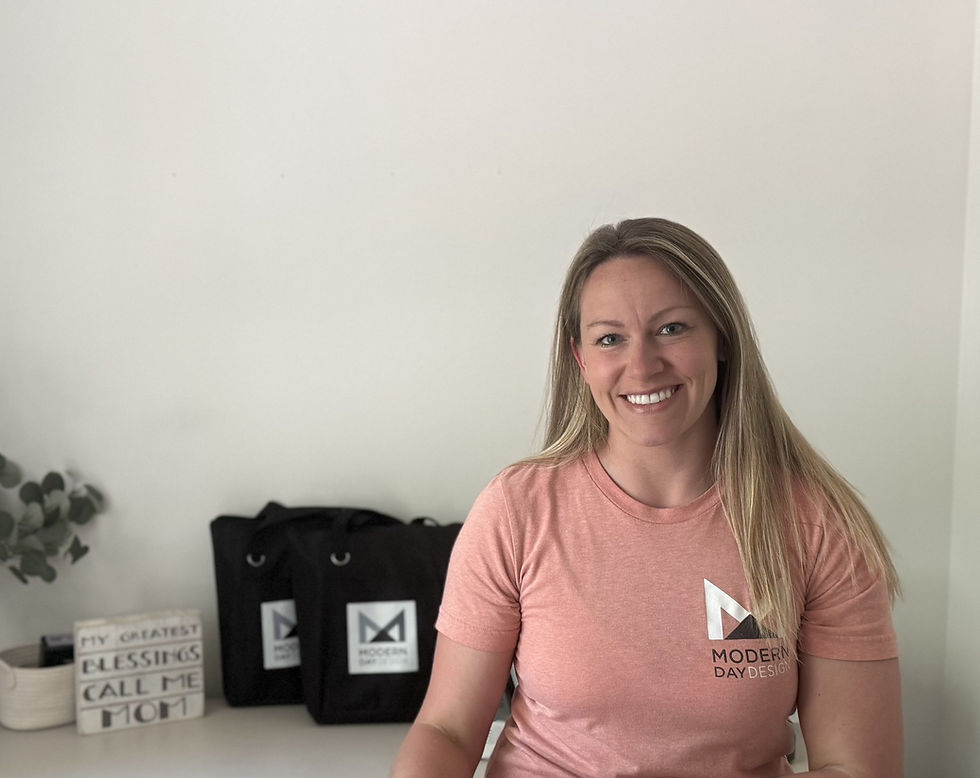
Not everyone enters our industry by following a traditional path, and that’s exactly what makes Rylee Heffernan's story so relatable. A Project Engineer with The Christman Company, Rylee began her career in logistics before discovering construction. She decided to explore opportunities in construction and quickly found a career that challenged her, kept her engaged and allowed her to learn something new every day. Today, she's helping oversee projects from the field while encouraging others, especially women, to see the opportunities available within the construction industry.
How did you find a career in the construction industry?
My path was probably a little different than most people. I went to school for Business Management and was working in logistics before considering construction. My husband works in fire suppression and focuses on one specific area of construction. He encouraged me to investigate general contracting, which oversees the entire process. This is a great fit for my personality because I stay busy and learn a lot. Looking back, I'm very thankful that he encouraged me to take that step.
What do you do as a Project Engineer?
I'm on site every day helping manage the flow of information between the office and the field. For example, I handle submittals and paperwork ahead of construction, so we can make sure we get the correct equipment, fixtures and materials before they ever go into a building.
There are also many day-to-day questions that come up, and part of my role is making sure everyone has the information they need to keep moving forward. There's so much involved in the position that it's hard to list it all out -- costs, budgets and customer relations. I really enjoy solving these problems and having that solution to use again. It keeps me on my toes and from getting bored at my job.
How did you end up in your current role?
I started at The Christman Company as a project administrator, working on a project site, but my focus was on the administrative side of things, handling contracts, insurance, safety documentation and other project-related paperwork.
From there, I transitioned into the corporate office as a Regional Administrator. I supported our project managers and superintendents by getting them things they needed, whether it was project documentation, supplies or other resources to keep
their jobs running smoothly.
As I worked with those teams, I became really interested in what was happening in the field. I saw how much knowledge our project managers and superintendents had and wanted to learn more about what they do. I started asking questions and eventually spoke with our leadership about what it would take for me to move into a field role.
I was given the opportunity to join a major project at Western Michigan University, which wrapped up earlier this spring. That's where I really hit the ground running. I came in with no field experience, started as a Field Engineer and learned as much as I could from the trades and the team around me.
By the end of that project, I was promoted to Project Engineer. So now I'm fully immersed in the field, but it's been a really rewarding journey from administration to
where I am today.
Do construction and trades jobs provide good benefits?
In addition to competitive pay, there are retirement plans, 401(k)s, health insurance and other benefits. The Christman Company is employee-owned, which creates additional opportunities for employees, but there are many construction companies that offer excellent retirement and benefit packages. It's so much more than just a paycheck. Companies genuinely invest in their employees' health, wellness and future.
What would you say to a woman who is considering a career in construction?
I would tell her not to be intimidated.
I know it can feel overwhelming when you walk into a room and you're the only woman there, but I've learned there's really no need to feel like you must stand out or prove yourself. Instead, take it all in. Listen, learn and observe how people work together and communicate.
At the same time, recognize that you bring something valuable to the table. Women often offer different perspectives and approaches that can benefit a team. You don't need to be the loudest voice in the room or feel like you have to take up all the space. What's important is knowing that your voice matters and that your contributions have value.
If you're willing to learn, work hard and speak up when needed, there's no reason you won't succeed in construction.
Why is it important to have a diverse workforce, including more women, in the construction industry?
I think we're seeing more women enter construction than we have in the past, and it's been wonderful to watch.
Just recently, we had a woman working with a door and frame crew on our site. It was great to see. She was organized, prepared and helped keep everyone aligned throughout the process.
What I find most valuable is that women often bring a different perspective to the jobsite. That's not to say experienced men don't bring those same strengths, because they absolutely do, but diversity in a team helps everyone think differently, solve problems in new ways and find more efficient approaches to the work.
Women are still underrepresented in many areas of construction, but it's encouraging to see more joining the industry. The different viewpoints and experiences they bring make teams stronger, and it’s exciting to see that positive change happening in the field.
Do you think a young woman could enter the trades without a degree and work her way up?
One hundred percent.
I was nervous about entering construction even with a bachelor's degree because it was in business, not construction management like many of my peers. But what I've learned is that so much construction knowledge comes from hands-on experience, being in the field and learning directly from the people around you.
If you're willing to apply yourself, absorb information and communicate effectively with the people around you, there is a place for you in this industry. There are so many different career paths available.


Comments